Cumbria CVS Green blog No 32 – October 2026
October 23, 2026

 Welcome back to Cumbria CVS Green!
In our thirty-second blog post Kat Hercberg, our South Copeland Development Officer, helps us get prepared for a greener winter, with some tops tips on eating, heating and transport…ing.
If you have any suggestions about what you’d like to see in our regular updates, let us know! Contact us by emailing info@cumbriacvs.org.uk
You can find our what we’re doing to minimise our environmental impact and find details of organisations supporting positive environmental action in Cumbria on our Climate Commitment page here
Catch up on our other blog posts here
How to reduce your environmental impact and stay warm, comfortable and connected
 I’m writing this on a rainy, grey day. The evenings are drawing in, the temperature is dropping, and I’m already thinking about hot, hearty meals bubbling away on the stove.
Whether you love it or loathe it, winter can make it harder to live sustainably. The abundance of summer is behind us, the heating goes on more often, and shorter days mean we rely more on electricity. However, there are still plenty of ways to reduce your environmental impact while staying warm, comfortable and connected. Here are a few tips, along with some local organisations that can help.
Eating seasonally and locally
While there may be less local produce available during autumn and winter, there is still plenty to enjoy. Think winter leafy greens, root vegetables and squash, all of which are in season and often available from local growers.
Autumn is also the perfect time for British apples. Keep an eye out for roadside stalls and community apple events. If you’re looking for a family-friendly day out, why not visit Sedbergh Apple Day on 24 October? Find out more here
If you’re based around Kendal or Egremont, you can also sign up for a weekly crop share box from Growing Well. The produce is grown by volunteers taking part in the charity’s mental health recovery programme, providing fresh local food while supporting an important community service.
Keeping cosy while keeping the bills down
One of the simplest ways to save energy is to focus on keeping yourself warm rather than heating your entire home. Layers are key, as the air trapped between them helps retain heat. With the right combination of clothing, many people find they are comfortable with their thermostat set between 18°C and 20°C. If you’re still feeling chilly, a hot water bottle or an electric blanket can provide extra warmth for very little cost, with many electric blankets costing just a few pence per hour to run.
With shorter days, we naturally use more artificial lighting. When it’s time to replace old bulbs, consider switching to LEDs, which use significantly less electricity and last longer. Futureproof Cumbria offers free support for eligible households, including LED bulb replacement and advice on improving home energy efficiency. They can also provide guidance on insulation and any grants that may be available. Speaking of insulation, it’s worth checking how well your home retains heat. An uninsulated roof can account for a significant amount of heat loss, making your heating work harder and increasing energy bills.
Transport
As the weather becomes wetter, colder and windier, walking and cycling can feel less appealing. Public transport is often a good alternative, but for those living in rural areas, conventional bus and rail services aren’t always available.
One option is The Extra Mile, a bookable minibus service provided by Westmorland and Furness Council, serving communities within approximately ten miles of Penrith and Ulverston. The Extra Mile | Westmorland and Furness Council
There’s also a selection of community buses throughout the county which are driven by volunteers:
- Fellrunner Bus: Penrith and surrounding villages in the Eden district, with routes into Penrith and Carlisle.
- Border Rambler Bus: Brampton, Carlisle, and surrounding rural communities along the A69/A689 corridors (including routes like BR1, BR3, and BR680 to Wetheral and Hadrian’s Wall points). Operates scheduled days using volunteer drivers.
- Western Dales Bus: South-east Cumbria, serving Sedbergh, Dent, Kendal, Kirkby Stephen, Penrith, and summer trips to Hawes. Connects rural residents to rail services at Dent and Oxenholme stations.
- Muncaster Microbus West Cumbria, serving Bootle, Eskdale, Wasdale, Holmrook, Seascale, and Gosforth with scheduled shopper/social trips to Whitehaven, Workington, and local markets.

Unblocktober 2026
Thursday 1st – Saturday 31st October. Improper waste disposal can lead to plastic pollution, a global crisis that we need to fight.
Unblocktober is a month-long national campaign and awareness month which was driven by the British public, to improve the health of our drains, sewers, watercourses and seas.
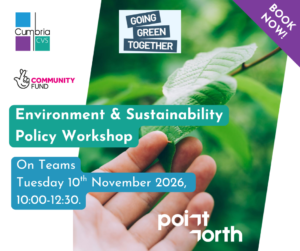 Environmental and sustainability policy workshop
Tuesday 10th November, online. This workshop will cover the importance of having an environmental and sustainability policy, how to write one, and how to implement effective action plans.
Find out more and book your place!
Climate Fresk
Tuesday 17th November, Kendal. Futureproof Cumbria’s Climate Fresk workshops offer a fun, engaging and collaborative way to explore the causes and impacts of climate change — and what we can do about it.
If you’d like to explore the climate crisis face-to-face, with other people, this could be just the thing for you. This session is free, so don’t delay, book now!
Good governance – building a stronger community energy group
Thursday 26th November, online. Good governance might not be the most exciting part of running a community project – but getting it right can make a big difference.
This free, Cumbrian-focused webinar will explore the practical side of governance and how it can help your group work effectively, build confidence and keep your project on track.
We’ll look at:
- Why governance matters and when you might need it.
- What good governance actually means in practice.
- Roles, responsibilities, rules and safeguards – and how these shape the way your group works.
- How your group’s culture fits into good governance.
- How making your governance visible can build confidence among members, partners, funders and your wider community.
There’ll be plenty of opportunity to ask questions, share experiences and discuss the challenges of getting governance right.

Red Squirrel Recovery Network Community Grants Scheme
Amount available: micro grants (under £500) and small grants (£500 to £5,000)
Deadline: Micro Grants: Applications are accepted on a rolling basis and reviewed monthly.
Small Grants: Applications are reviewed quarterly.
- Friday 30th October 2026
- Friday 29th January 2027
- Friday 30th April 2027
- Friday 30th July 2027
Funding is available for projects and activities that help more people connect with red squirrels, raise awareness of their conservation, engage new audiences, improve red squirrel habitats, and promote ecological learning and understanding.
Find out more about Red Squirrel Recovery Network Community Grants Scheme here
RSTUFF resource library
RSTUFF is a resource conservation campaign focused on helping individuals and communities reduce waste, reuse more, and make informed choices about the materials we use every day. They have developed an online library containing a wealth of resources to help you learn more about how you can use less resources and recycle more.
The library includes community toolkits designed for councils, schools, and community groups that help you to run low-cost initiatives throughout the winter, encouraging people to reuse and help reduce waste.
Together for a fairer, greener future
Climate and nature issues are inseparable from people’s everyday experiences of housing, transport, health, bills, pollution, flooding and access to green space. But policymaking does not always reflect this reality. Community knowledge is often gathered or quoted without being given real influence over policy, funding, governance or delivery.
NPC’s new report, Together for a fairer, greener future, makes the case for a richer form of collaboration – one that treats communities and grassroots organisations as partners in shaping problems, priorities and solutions, rather than simply as sources of evidence for decisions made elsewhere. The report draws on the Everyone’s Environment Leaders programme and work with senior civil society leaders, grassroots activists, policy professionals and people with lived experience. The research was facilitated through a partnership between NPC, Green Alliance and ACEVO.
Find out more and download the report
National Garden Scheme – Community Gardens Grants
Amount available: £1,500 to £5,000
Deadline: Friday 30 October 2026 (midday). Note only the first 300 eligible submissions will be considered for a grant.
The funding is for gardening projects carried out within local communities in.
The scheme is committed to:
- Sustainability in gardening so proposals need to demonstrate that they will be using sustainable gardening methods – for instance being as far as possible peat-free.
- Celebrating biodiversity so projects that encourage biodiversity and wildlife, while not essential, will be a positive.
The funding is for the creation of a garden or a similar project (such as an allotment) with horticultural focus for the benefit of the local community.
The project should aim to bring a community together by creating a space people can share, by the acquisition and sharing of gardening knowledge and skills and by inspiring a love of gardening.
The funding can be used for a number of things, including but not limited to:
- Plants and containers
- Materials for flower or vegetable beds and other hard landscaping
- Greenhouses, polytunnels and sheds
- Seating
- Hand tools and certain garden power tools (eg strimmers)
- Materials for providing refreshment.
Find out more about National Garden Scheme – Community Gardens Grants here
The Linnean Society – Our Local Nature Grants
Amount available: £1,000
Deadline: Sunday 25th October
The scheme provides grants to support innovative projects, designed and led by young people in the UK, which aim to increase access to local natural spaces and improve understanding of local biodiversity.
Find out more about The Linnean Society – Our Local Nature Grants here
International Tree Foundation – UK Community Tree Planting Programme
Amount available: Grants are available for community woodlands/hedging projects that range from 100 – 10,000 trees planted per year, with a maximum price equivalent to £2.15 per tree (inclusive of tree protection and mulch).
In addition, these projects also receive two maintenance grants equivalent to £0.10 per tree, disbursed in the first and second summers after planting.
Deadline: Friday 11th December
The UK Community Tree Planting Programme supports projects run by community groups and voluntary organisations that engage communities in planting and caring for native species of trees.
The Programme supports community projects that will:
- Conserve, restore and protect indigenous trees and woodlands, forests, habitats and associated biodiversity.
- Support community engagement in tree planting to promote reforestation and to increase awareness of the importance of trees and forests to environmental and human well-being.
- Encourage social cohesion and inclusion.
Community-based organisations, such as a school, community group, social enterprise, non-governmental organisation, or parish council, can apply.
Find out more about International Tree Foundation – UK Community Tree Planting Programme here


