Exploring informal carers and poor sleep
September 30, 2026
One of our Community Co-researchers, Becky, discusses their background and motivation, and explains their research topic – exploring why informal carers experience poor sleep.
Could you do your job if you were woken randomly several times a night to complete strenuous or complex tasks?
 That’s exactly what a lot of informal carers are having to do in looking after a loved one or friend. And it has a significant impact on the individual in the short term and can lead to lifelong sleep changes long after care roles are over.
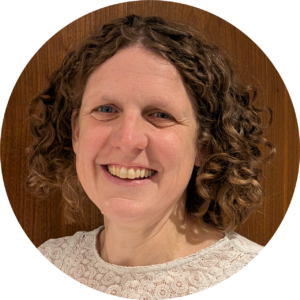
My name is Becky Blake. I am working as a Community Co-Researcher in Fells and Solway as part of a partnership between Cumbria CVS and the NIHR Health Determinants Research Collaboration exploring the factors that influence heath outcomes and wider wellbeing within communites across the Cumberland area.
I have worked for years as an Occupational Therapist and have witnessed carers struggling to cope in very challenging situations where their own health and wellbeing is put aside to care for another. One common area where people are impacted is the inability to get a good night’s rest, maybe due to having to get up to provide direct care, perhaps due to worry about finances, what’s going to happen the next day/week or hearing a relative wandering around the house. This can lead to care breakdowns and crisis situations.
I was drawn to the Community Co-researcher role as an opportunity to get involved in research at a grassroots level. It has been an opportunity to shape my own project with support and guidance from an expert team and links to service providers/commissioners to actually make a positive difference to the way services are being provided.
I selected to work particularly with informal carers as they are often a maligned group but whose efforts help vulnerable individuals to stay living in their own homes reducing costs for health and social care agencies.
Sleep is an issue covered often only briefly by health and social care professionals. It often isn’t as easy a fix as people might think and can be caused by diverse factors which will need different creative and flexible responses.
I am passionate to hear the voices of informal carers in Cumberland, share their experiences of sleep, what they feel is the underlying cause of their poor sleep and what might help to improve this.
I am planning to interview carers, exploring these factors, measuring sleep quality and the type of carer burden they are living with. This will support the development of a resource pack for health and social care professionals to better understand how sleep issues may manifest in caring situations and what approaches might help to make a sustainable change.
I am hopeful this could make a significant impact on the health and wellbeing of carers in both the immediate caring role but also after caring roles have subsided.
I have really enjoyed having time to explore an issue in detail. Although I haven’t started my “in the field” research yet I have loved having time to chat to carers to really understand their perspective and build connections. I have relished having access to research experts to expand my research skills, demystifying some of the processes involved and guiding me and my fellow Community Co-Researchers through our projects. I’m excited to be getting out into the field to have high-quality conversations with people and gaining new insights into people’s experiences.
There are now 17 Community Co-researchers working across Cumberland delivering an incredibly wide range of projects with the drive that these are community led to make tangible change within their communities. Keep an eye out for their projects popping up in your neighbourhood and get involved!
 Community Co-Researchers (CCRs) are hosted by Cumbria CVS and work as part of Cumberland Health Determinants Research Collaboration (HDRC) to design and deliver research focused on tackling health inequalities in Cumberland. Cumberland HDRC is part of the National Institute of Health and Care Research (NIHR) and hosted by Cumberland Council.
NIHR Health Determinants Research Collaborations enable local authorities to become more research-active, embedding a culture of evidence-based decision making. The NIHR has awarded £150 million to 30 HDRCs across the UK, to provide the capacity and capability for local authorities to undertake public health research to address the wider determinants of health and health inequalities.


